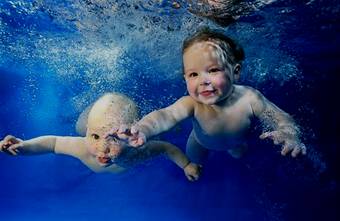
I have been contacting swimming instructors to promote the swimming lessons dvd and have "met" with Mark Dixon of Swimming South Africa. I love their beginners chart which the child completes with stickers.
It is also interesting to read their water safety rules. How many apply to where you live? (especially number 6!)
Rule 1: Learn to swim.
Seventy percent of the earth’s surface
is covered by water. Learning to swim is therefore a survival skill
which helps reduce drownings.
Rule 2: Never swim alone.
Although swimming is a survival skill,
even good swimmers can drown when they experience difficulties in the
water; for instance a cramp which immobilizes a muscle. Therefore
swimming alone is always unsafe.
Rule 3: Do not swim at a river mouth.
An undercurrent forms where the river
and the sea meet which flows in a different direction from the surface
current. An undercurrent is very strong and sucks anything and anybody
into the sea.
Rule 4: Never dive into unclear or shallow water.
Diving headlong into something
invisible underneath the water or into the bottom of a body of water
could cause serious damage, unconsciousness and even paralysis.
Rule 5: Do not play in swamps, on rocks or river banks.
Slippery and unstable surfaces near water are always dangerous and may cause sudden falls into unknown depths.
Rule 6: Beware of animals like crocodile and hippopotami under the water.
These large and dangerous African
aquatic animals keep close to riverbanks and attack easily when humans
intrude upon their habitats.
Rule 7: Beware of swift flowing undercurrents.
Water can flow very forcefully through
constricted areas, especially during floods when the volume of water
strengthens the current.
Rule 8: Check the depth of the water before you enter.
Familiarize yourself with the depth of a river, lake of dam by using a dipstick.
Rule 9: Have a rope or stick handy to help someone in trouble.
Only go into the water to help someone
in trouble if you are a qualified lifesaver. Otherwise try to help
someone in trouble by means of a rope or stick or a floatation device
tied to a rope that is thrown into the water.
Rule 10: Adult permission and supervision is a must.
Never go swimming without permission and always swim where a parent, guardian or adult may oversee you and your friends.